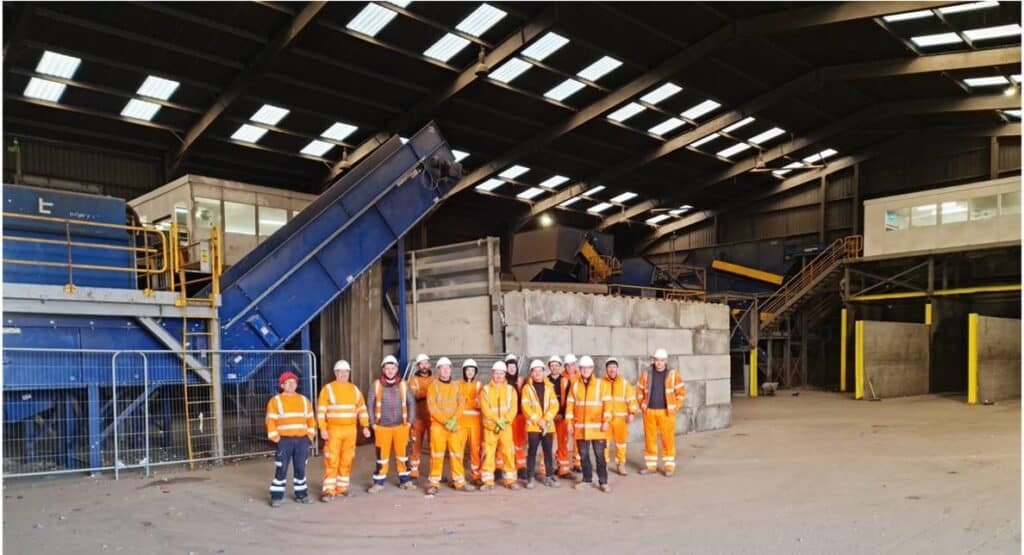
Cumbria Waste announce a recent acquisition in Middlesbrough. Cumbria Waste Group (CWG) has completed commissioning of a recently-acquired material recycling facility (MRF) in Middlesbrough.
Following a programme of site refurbishment and upgrades in sorting technology, the facility is now capable of processing any mix of recyclate streams. This includes a variety of materials including plastics, paper, card, glass and cans creating separated materials of high quality, maximising the value from recovered materials both environmentally and financially.
As a Group we are able to offer total management waste solutions, and we are well-positioned to support Local Authorities and commercial businesses that want to increase future waste management and recycling performance.
The facility expands the Group’s total waste management capacity, with existing collection, transfer and material processing operations located in Cumbria and North Lancashire.
Commenting on the expansion of CWG into the North East, Andy Chant, CEO of Cumbria Waste Group, said “ This development of the Group’s presence in the North East is an integral part of our growth strategy. The opportunity to repurpose the site and equipment, create jobs and form partnerships with local authorities and local businesses alike is exciting. Our stance is to offer a total waste solutions package to the market covering both public and private sectors and builds on the business model we have developed in Cumbria”.
Resource recovery, also known as materials recovery, is a key part of achieving sustainability and the avoidance of further environmental harm through the re-use of materials found in waste for productive purposes. Find out how Cumbria Waste Recycling maximises resource recovery in the recycling process. So get in touch with our knowledgeable and experienced team today to find out more about our waste management solutions.
What is resource recovery?
With the intention of reducing the amount of waste sent to landfill, resource recovery is the process of sifting through materials that have been discarded as waste to find salvageable components. This approach differs from recycling, which involves pre-sorting materials into recyclable and non-recyclable groups. The goal of resource recovery is to select recyclable materials from waste and use them to create new goods, as well as to generate electricity without having to rely on fossil fuels. It’s a step towards the overarching objective of eliminating waste and making the planet a more sustainable place.
What kinds of materials can be recovered?
Recoverable waste is rubbish that can be recycled or recovered in whole or in part and used to make something else.
Paper and cardboard, glass, lightweight plastic, wood, metal, residential and commercial electronic components like computers, and biological waste or biowaste are all examples of materials that fall into this category.
How our waste management processes increase resource recovery
During the process of recovery, waste is mechanically sorted by machine and by hand in order to remove all of the recyclable and reusable components that may be salvaged from it. The materials are then sorted and then processed so that they may be used again. Soil is screened, brickwork is broken, timbers and plants are mulched, and the metals, glass, plastics, and cardboard are shipped out to be recycled.
Wherever it is from, the majority of the waste is re-purposed. The remaining residue of non-recyclable material is usually sent to an energy recovery facility, where material is finally combusted to generate steam and electricity.
If you want to improve the sustainability and reduce the environmental impact of your business, use Cumbria Waste Recycling, with the confidence that our resource recovery process is second to none.